
Best AI Tools for Lawyers in 2026 (And the Sanctions Tracker Every Attorney Should Read First)
1,598 court cases now involve AI-fabricated citations. One attorney was suspended from practice entirely. Even paid, purpose-built legal AI tools hallucinate 17-34% of the time. Here's how to actually use AI in a law practice without becoming the next entry on that list.
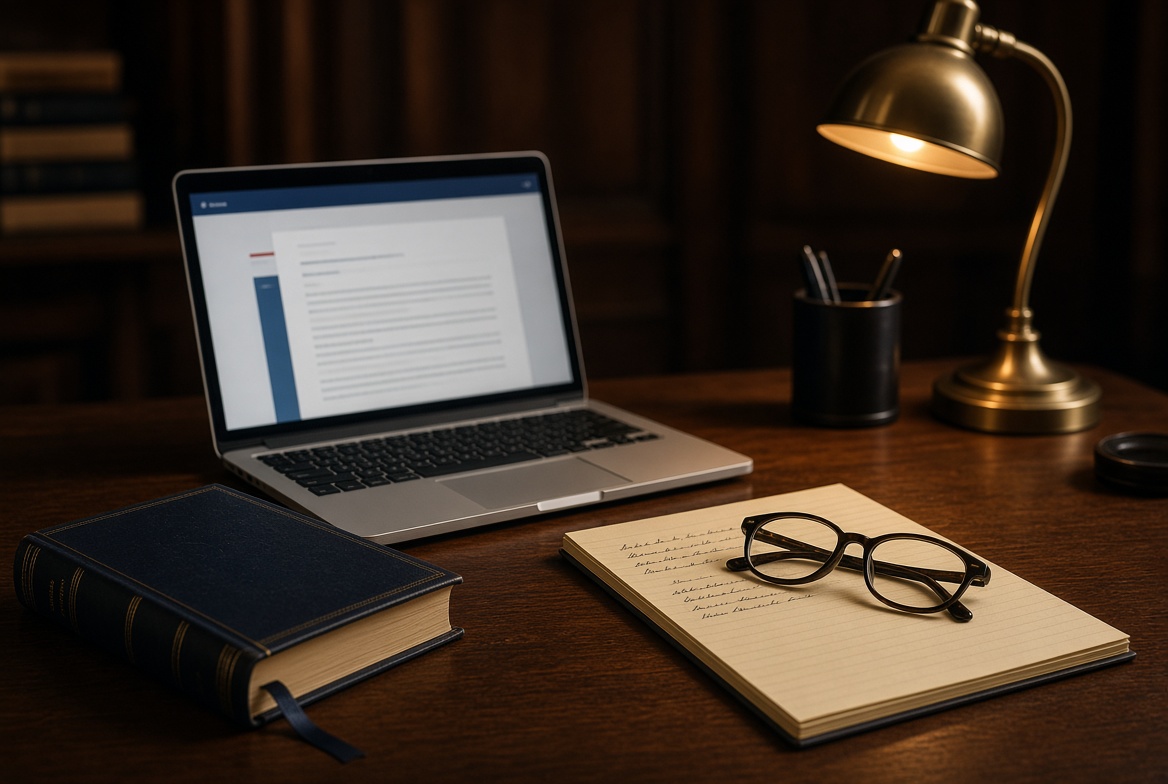
In June 2023, New York attorney Steven Schwartz stood before a federal judge trying to explain six court decisions that didn't exist. He'd asked ChatGPT to find supporting case law, and it confidently produced fabricated citations, invented case numbers, and quotes attributed to rulings that had never happened. Judge Kevin Castel sanctioned Schwartz, his co-counsel, and their firm $5,000. It read, at the time, like a cautionary one-off.
Three years later, that $5,000 fine looks like the opening line of a much longer story. As of June 9, 2026, the publicly tracked AI Hallucination Cases database maintained by researcher Damien Charlotin had identified 1,598 court cases worldwide involving AI-fabricated citations or content — up from roughly 200 cases just a year earlier. Of those, 496 involved licensed attorneys facing real professional consequences. The largest single penalty on record, from an Oregon federal court, hit $110,204.38. And in February 2026, an Omaha, Nebraska attorney was suspended from practice entirely — not primarily for the fabricated citations themselves, but because when a judge asked directly whether he'd used AI, he initially denied it.
This isn't a reason to avoid AI in legal practice. It's the essential context for using it correctly, because the pattern behind nearly every one of those 1,598 cases is identical: a lawyer signed a citation they never actually read.
Why legal citations are uniquely vulnerable to AI hallucination
Understanding the mechanism matters more than memorizing a rule here. A general-purpose language model doesn't consult a database of case law — it's a prediction engine generating the most statistically plausible next words given a prompt, with no built-in concept of whether "Smith v. Jones, 842 F.3d 1102" actually exists. Legal citations are, as one 2026 legal-AI analysis put it, "a perfect storm" for this architecture: they follow a rigid, learnable format, which means a model can produce something that looks exactly right — correct format, plausible court, plausible year — while being entirely fictional.
Crucially, this isn't just a general-chatbot problem you can solve by switching to a paid, purpose-built legal tool. Stanford RegLab's peer-reviewed study found that even dedicated legal research AI tools hallucinate 17% to 34% of the time. A Fifth Circuit case in 2026 involved an attorney using vLex and Thomson Reuters CoCounsel — established, purpose-built legal platforms — who still filed fabricated quotes and drew a $2,500 sanction. There is no safe harbor based on which vendor you trust.
The one rule that actually protects you
Every court order reviewed across this entire body of cases converges on the same distinction, and it's worth stating as plainly as the courts themselves have: using AI is not the sanctionable conduct. Filing unverified AI output is. In Gamez v. County of Fresno, a court accepted an attorney's explanation that he'd believed his AI tool had "anti-hallucination protection" and discharged the case without sanctions — the most favorable outcome in this entire tracked history, and notably, still contingent on the court believing the explanation was made in good faith rather than as an excuse for skipping verification. The rule that survives every one of these rulings: every citation, every quote, every case holding an AI tool produces gets independently verified against the primary source before it goes anywhere near a filing. Not spot-checked. Not "it looked right." Verified, individually, every time.
Where AI genuinely helps a law practice — used this way
Legal research and drafting — ChatGPT or Claude are genuinely useful for a first-pass literature scan, summarizing a long document, or drafting routine correspondence, exactly the kind of task where speed matters and the output gets human review before it's consequential. Neither should ever be the last step before a citation reaches a court filing.
Contract review and document analysis — Reviewing a long contract for specific clauses, inconsistencies, or missing standard provisions is a task AI genuinely accelerates, and the risk profile is different from case-law citation: you're checking AI's read of a document you already have in front of you, not trusting it to recall facts from memory.
Document summarization — Condensing a lengthy deposition transcript or discovery production into a working summary saves real hours, provided the summary is treated as a starting point for your own review, not a substitute for reading the underlying document on anything that matters to the case.
What NOT to do, based on exactly what got other attorneys sanctioned
- Never file a citation you haven't personally pulled and read. This is the single behavior behind nearly every case in the 1,598-case tracker.
- Never assume a "reputable" or paid legal AI tool is hallucination-proof. The Fifth Circuit vLex/CoCounsel case above is the clearest possible evidence against that assumption.
- Never deny using AI if a court asks directly. The Nebraska suspension escalated specifically because of the denial, not the underlying fabricated citations alone — candor with the court is something no AI tool can provide on your behalf.
- Never let a junior associate's AI-assisted work go unchecked by a senior reviewer. Documented cases include an in-house "legal AI" platform fabricating eight of nine citations in a single brief, and supervision rulings in multiple jurisdictions where a senior attorney signed junior work without independently verifying it.
The stack, with the caveat built in
| Use case | Tool | The non-negotiable step |
|---|---|---|
| Case law research | ChatGPT, Claude, or a purpose-built legal tool | Independently verify every citation against the primary source |
| Contract review | AI document analysis | Read flagged clauses yourself before relying on the flag |
| Document summarization | Claude (long-context) | Treat as a starting point, not a final read of the source |
| Drafting correspondence | ChatGPT | Standard proofreading, same as any drafted work |
Final thoughts
The 1,598 cases in that tracker aren't a story about AI being untrustworthy in some abstract sense — general-purpose and purpose-built legal tools alike hallucinate at meaningfully high, well-documented rates, and that's simply a known, quantified property of the technology at this point, not a mystery. The actual story is about verification discipline: every sanctioned attorney in that database skipped the one step that would have caught the problem before it reached a judge. Use AI for the research and drafting speed it genuinely offers. Then read, personally, every case you're about to cite — the way you would have had to before AI existed at all.
Alex Rivera is a ai editor at ToolVerse AI, covering AI tools and the future of software. Alex has been writing about AI since 2022 and personally tests every tool covered in this guide.
- Hands-on AI tester
- Covers AI since 2022
- ToolVerse AI editorial team
Frequently asked questions
Our verdict on this legal guide
The ToolVerse AI editorial team evaluated every tool and claim in "Best AI Tools for Lawyers in 2026 (And the Sanctions Tracker Every Attorney Should Read First)" against five criteria, with hands-on testing, source-checking and a quarterly accuracy review.
- Ease of useOnboarding flow, UX clarity and time-to-first-value.4.6
- Features & depthBreadth of capabilities vs. category benchmarks.4.5
- Pricing valueFree-tier generosity and price-to-output ratio.4.8
- PerformanceSpeed, reliability and output quality in real tests.4.7
- Support & docsHelp center, response times and community resources.4.3
How we evaluate AI tools
Every product on ToolVerse AI is independently tested by our editors. We sign up, complete the same real-world tasks across each tool in a category, document the experience, and compare against direct competitors. We don't accept payment for rankings, and affiliate relationships never influence editorial scores. Scores are reviewed quarterly to reflect new features, pricing changes and user feedback.
Related articles

15 AI Tools for Productivity in 2026 (Save 10+ Hours/Week)
The AI productivity stack that actually saves knowledge workers hours every week in 2026 — with the real pricing changes and ownership shifts most roundups miss.

Free vs Paid AI Tools: When Is It Actually Worth Paying?
AI model costs have collapsed in 2026 — but 65% of AI tools still charge you anyway. Here's the real framework for deciding when a subscription pays for itself, and when it's just a habit.

The 15 Best AI Tools You Should Be Using in 2026
From ChatGPT to Midjourney — here are the AI tools that are actually changing how professionals work in 2026, tested and ranked by the ToolVerse team, with real pricing and honest trade-offs.