
Best AI Tools for Ecommerce Stores in 2026 (Shopify & DTC)
Best AI tools for ecommerce in 2026 for product photos, ads, support and SEO. Real pricing traps on Photoroom, AdCreative.ai and Gorgias, plus a free Shopify Magic starting point.
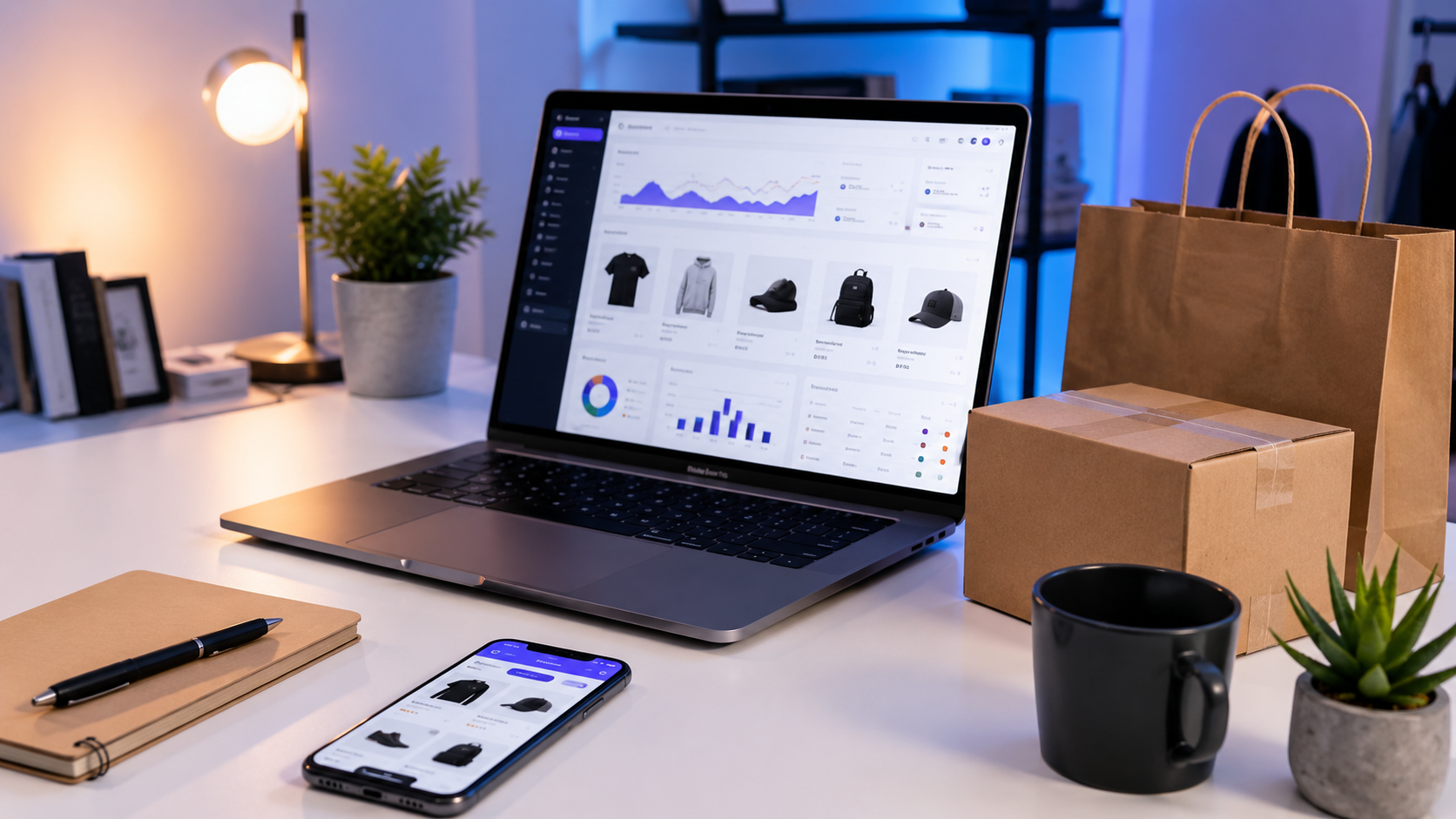
Ecommerce margins stayed tight in 2026, and AI is how lean Shopify and DTC teams keep up without a full creative or support department. Gorgias's State of Conversational Commerce 2026 report found 96% of ecommerce professionals using AI in their role, up from 69% in 2024. That is less a trend piece and more the new baseline.
This list sticks to four jobs that actually move revenue: product imagery, ad creative, customer support, and SEO-ready product content. Each pick includes the price you see on the marketing page and the billing detail that shows up later. If you have already stacked five overlapping AI subscriptions, read AI tool sprawl for small business before adding another seat.
For industry landing context beyond this article, see AI tools for ecommerce and the AI Ecommerce category.
Product photos: Photoroom and Shopify Magic
Studio days still cost real money. Photoroom removes backgrounds and builds styled scenes from a flat product shot, with batch workflows that matter once the catalog is more than a handful of SKUs.
Budget carefully: the low monthly headline (often advertised near $8/month) sits next to credits, batch caps, and API pricing roughly in the $0.02-0.10 per image range. Run your real SKU count through that math before treating the sticker price as the full bill.
Shopify Magic covers basic background removal and simple AI scenes on every Shopify plan at no extra subscription. It will not replace Photoroom for a large catalog, but a small store can ship acceptable PDPs without another vendor. Official Shopify help docs on Magic features are worth a skim when you enable it in admin: Shopify Magic documentation.
Ad creative: Midjourney and AdCreative.ai
Midjourney still leads on scroll-stopping stills when the feed is crowded. Pair volume testing with AdCreative.ai, which scores creative variants so you do not spend media budget on every random export.
Watch the tier gap: Starter (commonly about $20-39/month) is effectively image-led. UGC-style and broader video workflows often sit on Professional around $249/month. If video ads are required from week one, budget Professional up front. For pure image generation alternatives, browse AI image generators.
Customer support: Gorgias (and the double-charge detail)
Gorgias remains the default ecommerce help desk for many Shopify brands, with AI Agent handling support and shopping-assistant style turns. Vendor-reported outcomes in their 2026 conversational commerce material include strong conversion lifts for teams that use the shopping assistant well. Treat vendor ROI figures as directional and validate on your own ticket mix.
Billing is the decision risk. Gorgias is ticket-based, not simple per-seat only. AI-resolved conversations can consume plan ticket allowance and add a separate AI resolution fee (often cited near $0.90-1.00). A store with thousands of conversations a month can land far above the list price once overages and AI fees stack. Model last month's ticket volume before you pick a plan. More support-oriented AI options live under AI for business.
SEO product descriptions: ChatGPT plus a brief tool
Catalog copy at scale is tedious and easy to ship thin. ChatGPT drafts fast; ranking still needs search intent. Pair drafts with Frase or Surfer SEO so titles and descriptions track real queries, not generic adjectives. Publish only after a human pass for claims, materials, and compliance.
For a wider SEO stack (not only PDPs), use best AI tools for SEO and the monitoring guide best AI search monitoring tools if AI Overviews matter for category terms.
Realistic starter stack
| Tool | Job | Cost to budget | Watch for |
|---|---|---|---|
| Shopify Magic | Basic product photos | Free on Shopify plans | Shallow for large catalogs |
| Photoroom | Batch product imagery | ~$8+/mo + API/credits | Credits hide true cost |
| Midjourney | Ad still quality | ~$10-30/mo | No classic free trial |
| AdCreative.ai | Creative volume + scoring | ~$20-39/mo images | Video often needs ~$249/mo |
| Gorgias | Support + AI agent | List price + ticket/AI fees | AI resolutions can double-count cost |
| ChatGPT | Description drafts | ~$20/mo | Needs SEO brief + human edit |
Where to start
If the stack is empty, start with photos and ads. Visual quality shows up in CTR within days. Add Gorgias when ticket volume pays for itself under the real fee model, not the homepage price. SEO copy compounds slower; treat it as infrastructure. Branding before launch is covered in best AI logo generators. For the cost of picking the wrong seat, see hidden cost of the wrong AI tool.
Final thoughts
The best AI tools for ecommerce in 2026 are not the longest list. They are the two or three that clear your bottleneck (photos, creative fatigue, or support) after you model real billing. Every tool above has a trap somewhere in credits, tiers, or tickets. Knowing that before checkout is worth more than the first month of any single subscription.
Jordan Patel is a tech analyst at ToolVerse AI, covering AI tools and the future of software. Jordan has been writing about AI since 2022 and personally tests every tool covered in this guide.
- Hands-on AI tester
- Covers AI since 2022
- ToolVerse AI editorial team
Frequently asked questions
Our verdict on this ecommerce guide
The ToolVerse AI editorial team evaluated every tool and claim in "Best AI Tools for Ecommerce Stores in 2026 (Shopify & DTC)" against five criteria, with hands-on testing, source-checking and a quarterly accuracy review.
- Ease of useOnboarding flow, UX clarity and time-to-first-value.4.7
- Features & depthBreadth of capabilities vs. category benchmarks.5.0
- Pricing valueFree-tier generosity and price-to-output ratio.4.7
- PerformanceSpeed, reliability and output quality in real tests.4.7
- Support & docsHelp center, response times and community resources.4.3
How we evaluate AI tools
Every product on ToolVerse AI is independently tested by our editors. We sign up, complete the same real-world tasks across each tool in a category, document the experience, and compare against direct competitors. We don't accept payment for rankings, and affiliate relationships never influence editorial scores. Scores are reviewed quarterly to reflect new features, pricing changes and user feedback.
Related articles

The 15 Best AI Tools You Should Be Using in 2026
From ChatGPT to Midjourney — here are the AI tools that are actually changing how professionals work in 2026, tested and ranked by the ToolVerse team, with real pricing and honest trade-offs.
Best AI Logo Generators in 2026 (Tested)
The 3 AI logo generators actually worth using in 2026 — and why almost every pricing page in this category is more confusing than it needs to be.

Free vs Paid AI Tools: When Is It Actually Worth Paying?
AI model costs have collapsed in 2026 — but 65% of AI tools still charge you anyway. Here's the real framework for deciding when a subscription pays for itself, and when it's just a habit.

Hidden Costs of AI Tools: What the Wrong Subscription Really Costs Your Business (With a Calculator)
The price on the pricing page is the smallest part of what an AI tool costs. Here are the seven hidden costs of AI tools, a simple calculator with worked numbers, and a 20-minute check to stop paying for the wrong one.
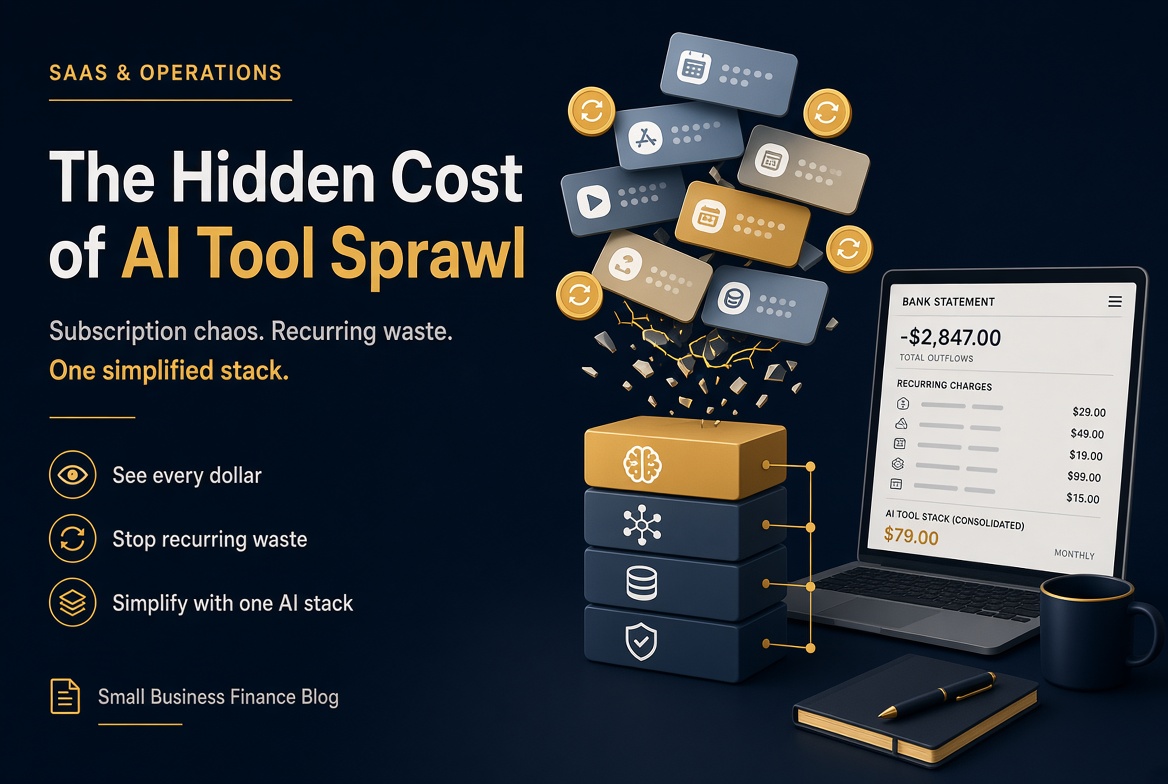
The AI Tool Sprawl Problem: Why Your Business Is Probably Paying for the Same Feature Three Times
Many small teams now run five or more AI subscriptions that quietly overlap. Here is how tool sprawl happens, what it costs, and a simple quarterly audit so you stop paying for the same job twice.