
Best AI Tools for Marketers in 2026
JPMorgan Chase saw a 450% CTR lift from AI-generated ad copy — but a 2026 analysis of dozens of campaigns found the tool almost never explains the win. The system around it does. Here's what that system actually looks like.
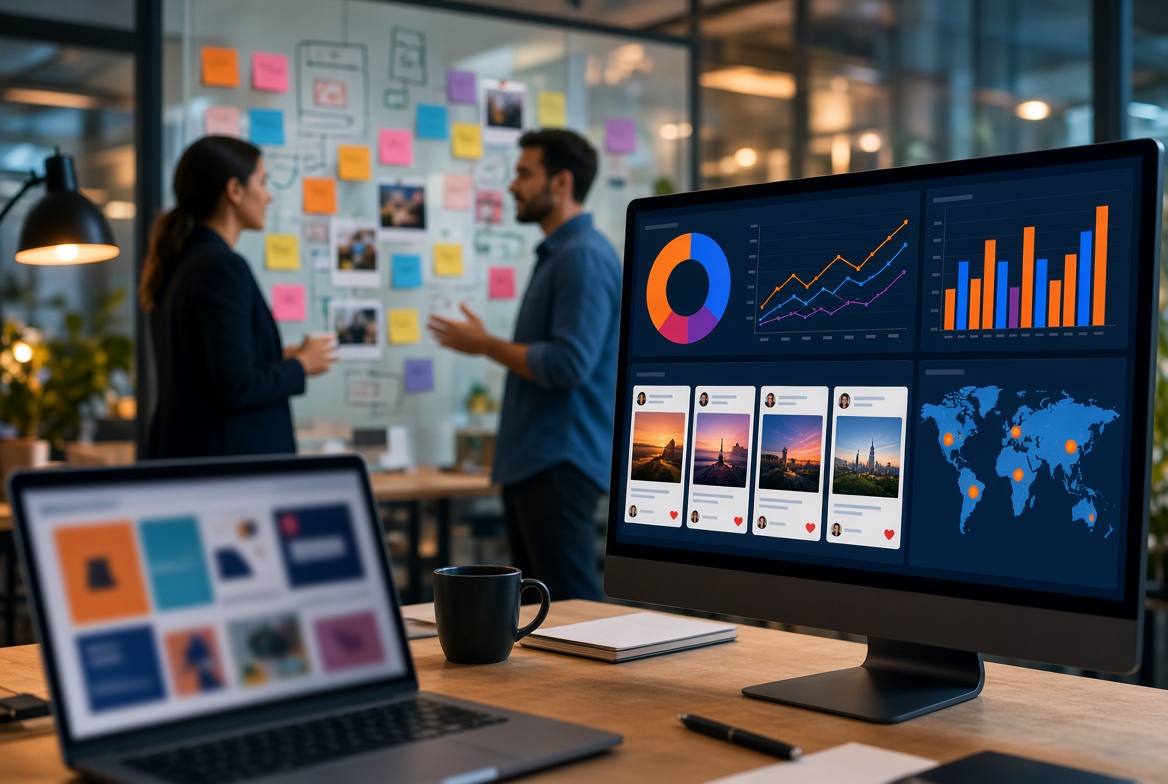
JPMorgan Chase ran AI-generated ad copy against human-written versions and found the best-performing AI variant lifted click-through rates by as much as 450%. That's a genuinely remarkable number, and it's the kind of statistic that gets quoted constantly in "AI marketing tools" roundups — usually without the context that makes it useful. A 2026 analysis reviewing dozens of documented AI marketing case studies found something more important than any single tool's win rate: "the most consistent finding across the examples... is not about speed or volume. It is about workflow. The teams producing reliable results with AI marketing... built structured source material, clear brand voice standards, defined review gates, and human ownership into the process before scaling output."
In other words, the JPMorgan result wasn't really about which AI model wrote the copy — it was about a team that tested variants rigorously, against a real baseline, with a human deciding what "good" meant. That distinction matters more than which tools you pick, and it's why this guide leads with a system, not a shopping list.
The three places AI marketing actually moves numbers
Before the tools, it's worth knowing where the real, documented gains cluster, because it's narrower than most vendors imply. A July 2026 review of AI marketing performance data found the strongest returns concentrate in three specific areas: personalization at scale (AI-driven personalization improves conversion 20-35% over static campaigns — "not marginal," as the report puts it), paid media bidding (15-25% CPA improvement once there's enough data volume to work with), and content production speed (60-70% faster first drafts, with quality maintained only when a human still reviews the output). Notice what's not on that list: fully autonomous campaign management. The same analysis is blunt about this — "as of 2026, fully autonomous AI campaign management without human guardrails consistently produces off-brand output, budget inefficiencies, and audience fatigue in documented cases."
ChatGPT and Claude — for copy variants, not final copy
ChatGPT and Claude are where most marketing teams start, and the JPMorgan result above is a genuine example of the right use case: generating multiple genuinely different ad copy angles fast, then testing them against each other with real budget rather than picking the one that reads best in a meeting. The mistake teams make isn't using AI to write copy — it's publishing the first output without the A/B test that actually validates whether it works for their audience, not just in general.
Midjourney and Adobe Firefly — for creative iteration speed, with a human still steering
A widely-cited Superside case study on AI-assisted video production reported the team finished 40-60% faster than traditional production, using Midjourney and Adobe Firefly to iterate campaign concepts quickly rather than waiting on a full production cycle for every direction. The framing from that report is worth repeating exactly: "the tech doesn't replace the creatives; it multiplies their impact." That's a genuinely different claim than "AI generates the campaign" — it's specifically about compressing the iteration loop between an idea and a testable visual.
A personalization engine, if your traffic actually supports it
The 20-35% conversion lift from AI-driven personalization is real, but it has a precondition most smaller teams miss: it requires enough behavioral data — browsing history, purchase patterns, engagement signals — to actually train on. Sephora's well-documented use of AI for personalized recommendations, virtual try-on and targeted promotions works specifically because they have the traffic volume to make those signals meaningful. A tool like Copy.ai or a dedicated personalization platform can layer this in once your audience size justifies it; below a certain traffic threshold, the "personalization" mostly just becomes noise with extra steps.
Where the workflow actually breaks down
The Pragmatic Digital review above is worth returning to because it names the specific failure pattern: teams that skip building "structured source material, clear brand voice standards, defined review gates" before scaling AI output. In practice, that looks like a team that never wrote down what their brand voice actually sounds like, so every AI-generated post drifts slightly differently — individually fine, collectively inconsistent in a way that a reader eventually notices even if they can't name why.
The fix isn't complicated, but it's a step most teams skip because it's less exciting than trying a new tool: write down 3-5 concrete examples of copy that sounds like your brand and copy that doesn't, and check new AI output against those examples before it publishes — not after a campaign underperforms and you're trying to figure out why.
The stack, organized by what it's actually for
| Job | Tool | Documented result | The catch |
|---|---|---|---|
| Ad copy variants | ChatGPT / Claude | Up to 450% CTR lift (JPMorgan) | Only when tested against a real baseline |
| Creative iteration | Midjourney / Adobe Firefly | 40-60% faster production (Superside) | Needs a human steering final direction |
| Paid media bidding | Platform-native AI bidding | 15-25% CPA improvement | Requires sufficient data volume |
| Personalization | Behavioral-data-driven tools | 20-35% conversion lift | Needs real traffic to train on |
What to actually do with this
Don't start by picking a tool. Start by picking the one metric in your current funnel that's genuinely underperforming — CTR on ads, conversion on email, production speed on creative — and match it to the row above that addresses it directly. Build the review gate (the brand-voice checklist, the A/B test against a real baseline) before you scale output with that tool, not after. That ordering is the entire difference between a JPMorgan-style documented win and the "off-brand output, budget inefficiencies, and audience fatigue" the July 2026 review warns about when teams skip it.
For the content-production side of this specifically, our broader guide to AI tools for content creators goes deeper on the scripting, visual and repurposing tools that pair well with the campaign tools above.
Final thoughts
The gap between marketing teams getting real, measurable results from AI and teams getting generic, off-brand output almost never comes down to which model they're using — GPT-5.6 and Claude Sonnet 5 are both genuinely capable of the JPMorgan-level result. It comes down to whether there's a real system around the tool: a baseline to test against, a brand-voice standard to check against, and a human who owns the final call before anything ships. Build that system first. The tool matters less than the roundups suggest.
Nina Park is a productivity lead at ToolVerse AI, covering AI tools and the future of software. Nina has been writing about AI since 2022 and personally tests every tool covered in this guide.
- Hands-on AI tester
- Covers AI since 2022
- ToolVerse AI editorial team
Frequently asked questions
Our verdict on this marketing guide
The ToolVerse AI editorial team evaluated every tool and claim in "Best AI Tools for Marketers in 2026" against five criteria, with hands-on testing, source-checking and a quarterly accuracy review.
- Ease of useOnboarding flow, UX clarity and time-to-first-value.4.5
- Features & depthBreadth of capabilities vs. category benchmarks.4.6
- Pricing valueFree-tier generosity and price-to-output ratio.4.6
- PerformanceSpeed, reliability and output quality in real tests.4.9
- Support & docsHelp center, response times and community resources.4.3
How we evaluate AI tools
Every product on ToolVerse AI is independently tested by our editors. We sign up, complete the same real-world tasks across each tool in a category, document the experience, and compare against direct competitors. We don't accept payment for rankings, and affiliate relationships never influence editorial scores. Scores are reviewed quarterly to reflect new features, pricing changes and user feedback.
Related articles
10 AI Tools Every Content Creator Needs in 2026
91% of creators now use AI in their production process — but the ones actually growing aren't the ones using the most tools. Here's the AI content creation stack that holds up in 2026, and the trap most solo creators fall into.

Best AI Tools for Ecommerce Stores in 2026 (Shopify & DTC)
Best AI tools for ecommerce in 2026 for product photos, ads, support and SEO. Real pricing traps on Photoroom, AdCreative.ai and Gorgias, plus a free Shopify Magic starting point.
How to Use AI for SEO in 2026 (Without Getting Penalized)
Over 60% of new online content now shows signs of AI generation — and Google's May 2026 update specifically targets the unedited kind. Here's the workflow that survives it, including exactly how we built this site.